

Newsletter
Subscribe our newsletter
Get new infrastructure guides, comparison reports, and migration notes in your inbox.
Managed Kubernetes vs Kubernetes on Bare Metal: Which One Should You Choose?
The debate around Managed Kubernetes vs Kubernetes on bare metal usually comes down to cost, operational effort, scalability, and control. Teams running production workloads often struggle to decide whether managed services like cloud-hosted Kubernetes are worth the price compared to running Kubernetes directly on physical servers.
Understanding the core difference
Managed Kubernetes offloads most of the control-plane and infrastructure responsibilities to a cloud provider. Kubernetes on bare metal, by contrast, gives you full ownership of hardware, networking, storage, and lifecycle management.
Real-world operator experience shows that neither option is simply "better." The right choice depends on your scale, workloads, and team maturity.
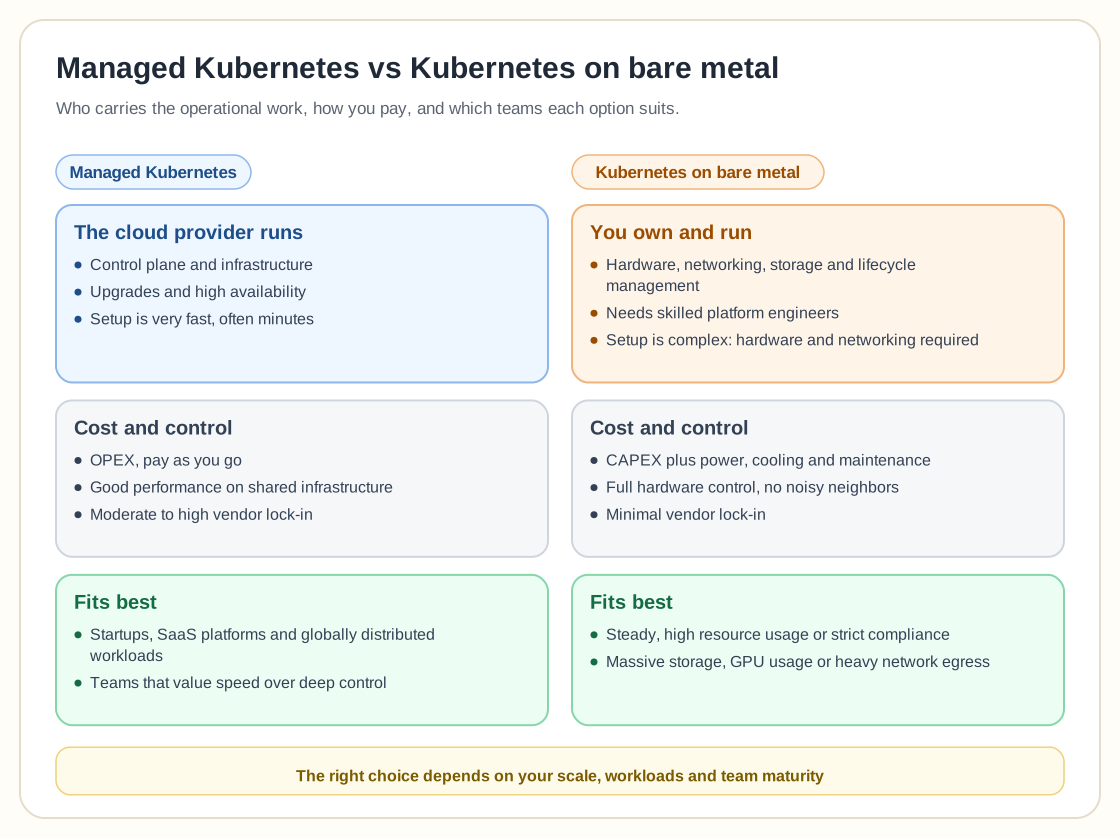
Managed Kubernetes vs Kubernetes on bare metal: side-by-side comparison
| Category | Managed Kubernetes | Kubernetes on Bare Metal |
|---|---|---|
| Initial Setup | Very fast, often minutes | Complex, hardware and networking required |
| Operational Effort | Low, upgrades and HA are handled | High, requires skilled platform engineers |
| Cost Model | OPEX, pay-as-you-go | CAPEX + power, cooling, maintenance |
| Performance | Good, but shared infrastructure | Excellent, full hardware control |
| Vendor Lock-in | Moderate to high | Minimal |
Main benefits of managed Kubernetes
- Minimal operational overhead for control plane management
- Easy scaling and multi-zone availability by default
- Smaller teams can manage many clusters efficiently
- Faster onboarding for engineers familiar with cloud platforms
Main benefits of Kubernetes on bare metal
- Lower long-term cost at large, predictable scale
- Higher performance per core with no noisy neighbors
- Full control over networking, storage, and security
- Strong data sovereignty and compliance advantages
When each option makes sense
Managed Kubernetes is ideal for startups, SaaS platforms, globally distributed workloads, and teams that value speed over deep control.
Kubernetes on bare metal fits enterprises with steady, high resource usage, strict compliance requirements, or workloads involving massive storage, GPU usage, or heavy network egress.