

Proxmox VE 9.2 Released: Dynamic Load Balancer, WireGuard SDN & Linux Kernel 7.0
Proxmox VE is a free, open-source virtualization platform for KVM virtual machines and LXC containers. Version 9.2 introduces dynamic cluster load balancing, native WireGuard and BGP fabrics in the software-defined networking stack, custom CPU model management in the web interface, and new cluster-wide HA arm and disarm controls.
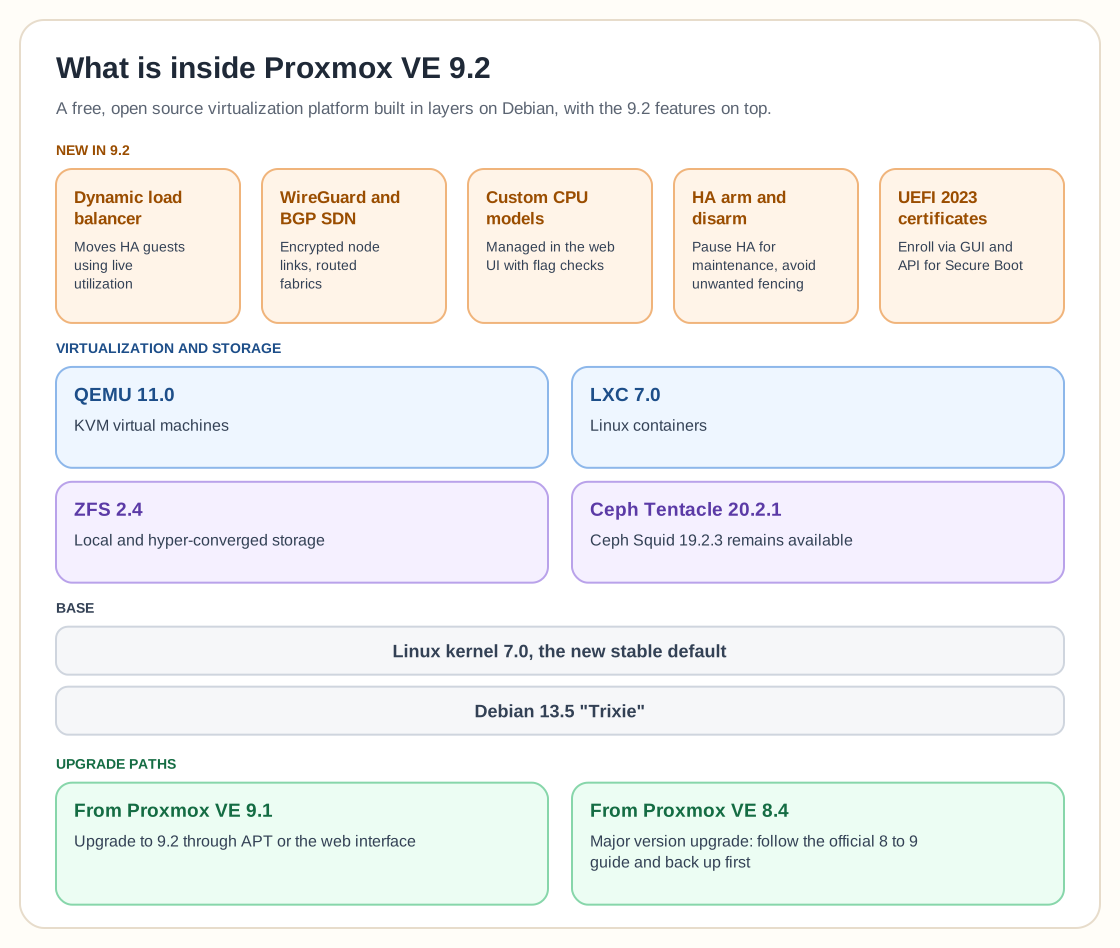
Built on Debian 13.5 "Trixie" with Linux kernel 7.0 as the new stable default, and an updated virtualization and storage stack: QEMU 11.0, LXC 7.0, ZFS 2.4, and Ceph Tentacle 20.2.1 (Ceph Squid 19.2.3 remains available).
Key Highlights in Proxmox VE 9.2
Dynamic Load Balancer
The Cluster Resource Scheduler can use real-time node and guest utilization when deciding where workloads run. It automatically migrates HA-managed VMs and containers to reduce imbalance while respecting HA rules.
WireGuard and BGP SDN Fabrics
Native WireGuard gives encrypted connectivity between nodes; BGP fabrics ease integration with routed data-center networks. The release also adds route maps, prefix lists, OSPF redistribution, more EVPN controller options, and IPv6 EVPN underlay.
Custom CPU Models in the Web UI
Create, edit and delete custom virtual CPU models directly from Datacenter. A built-in flag selector shows which flags are supported across nodes, catching compatibility problems before a VM migrates.
HA Arm and Disarm Controls
Cluster-wide controls to temporarily disarm the HA manager during planned maintenance. This prevents unwanted fencing while preserving resource state. Resources return to prior HA behavior once rearmed.
Microsoft UEFI 2023 Certificate Enrollment
The GUI and API can now enroll Microsoft and Windows UEFI 2023 certificates, easing prep for newer Secure Boot requirements without manual CLI workflows.
Proxmox for Enterprise
Practical server and storage configurations for reliable, scalable production clusters on proven enterprise hardware, aimed at mission-critical Proxmox deployments.
Explore Enterprise Hardware →Watch it instead
A numbered course from what a hypervisor is through clustering and passthrough, plus longer walkthroughs on install, ZFS and migrating off VMware.


What Is New in Proxmox VE 9.2
Linux Kernel 7.0
The new stable default kernel, with newer hardware enablement, driver updates, performance improvements and upstream virtualization fixes.
QEMU 11.0 & LXC 7.0
Updated virtualization stack with broader hardware compatibility and continued performance and stability improvements for both VMs and containers.
ZFS 2.4
Updates the integrated storage stack for local and hyper-converged deployments. Review pool compatibility before enabling new on-disk features if you may need rollback.
Ceph Tentacle 20.2.1
The new stable Ceph release for PVE 9.2. Ceph Squid 19.2.3 remains supported, giving cluster operators time to plan and test the storage upgrade.
Automate Your Proxmox Setup
Community-maintained Proxmox helper scripts save hours of manual configuration. Use them to deploy containers, optimize settings and manage your infrastructure with less effort.
Explore Helper Scripts →Proxmox Backup Server
Protect virtual machines and containers with deduplicated, incremental backups, verification jobs, offline storage options, and remote synchronization.
Learn About PBS →Learning Resources & Guides
The Proxmox Tarot: 100-Card Illustrated Deck
An illustrated deck and plain-text reference covering every core Proxmox concept across 5 suits: Nodes, Vessels, Disks, Bridges, and Scrolls.
Proxmox Video Tutorials
28 walkthroughs across two series: a numbered course from first principles, and longer how-tos on install, ZFS, clustering and migrating off VMware.
How to Install Proxmox VE on a Home Server
A step-by-step installation guide for deploying Proxmox VE with the bare-metal ISO installer.
10 Proxmox Mistakes You Don't Want to Make
Common planning, storage, networking, backup and cluster mistakes that can create avoidable problems later.
What Is Proxmox VE and How Does It Work?
An introduction to the open-source virtualization platform: KVM VMs, LXC containers, storage, networking, clustering and backups.
LXC vs VM vs Docker: Which Should You Use?
A practical decision guide comparing isolation, performance, backup behavior, compatibility and operational risk.
5 Free Ways to Expose Your Home Server
Cloudflare Tunnel, Tailscale, ngrok, ZeroTier and WireGuard compared on bandwidth, domains and the terms-of-service traps, plus why the Proxmox web UI should never be one of the things you expose.
Get Started with Proxmox VE 9.2
Download & Installation
- ✓Complete ISO installer for bare-metal deployment
- ✓Install on top of Debian 13 "Trixie"
- ✓Upgrade Proxmox VE 9.1 to 9.2 through APT or the web interface
- ✓Upgrade Proxmox VE 8.4 to 9.2 by following the official major-version upgrade guide
- ✓Review the required Ceph upgrade sequence before moving a Ceph Reef cluster to Squid or Tentacle
Enterprise Support
- ✓Access to the Enterprise Repository
- ✓Stable and extensively tested updates
- ✓Web-based management and maintenance tools
- ✓Direct technical support from Proxmox
Should You Upgrade to Proxmox VE 9.2?
Proxmox VE 9.2 is a meaningful upgrade for multi-node clusters, especially when HA workloads become unevenly distributed or when the network design requires encrypted fabrics, BGP routing, or more precise EVPN control.
Single-node home labs will benefit mainly from the newer kernel, QEMU, LXC, ZFS, and general platform fixes. The dynamic load balancer and HA maintenance controls become more valuable as the number of nodes and production workloads grows.
Before upgrading, verify backups, update the existing installation fully, review third-party packages, confirm hardware compatibility with the new kernel, and test the upgrade process on non-production systems where possible.
Frequently Asked Questions
Proxmox VE 9.2 is the May 2026 release of the open-source virtualization platform. It adds dynamic cluster load balancing, expanded SDN features, custom CPU model management, HA maintenance controls, and an updated Debian 13.5 based technology stack.
Yes. Proxmox states that installations running version 9.1 can upgrade to the stable 9.2 release through APT or the web interface. Update the current installation and follow the official repository and upgrade guidance first.
Yes, but this is a major-version upgrade and should follow the official Proxmox VE 8 to 9 upgrade guide. Back up all workloads and cluster configuration, check the upgrade script output, and resolve warnings before proceeding.
The new dynamic load balancer works with guests managed by the Proxmox HA stack. It uses real-time resource data and HA rules when deciding whether workloads should be migrated between cluster nodes.
Yes. WireGuard is now available as a native SDN fabric protocol, allowing encrypted communication between participating nodes and networks.
Linux kernel 7.0 is the new stable default kernel in Proxmox VE 9.2.
Ceph Tentacle 20.2.1 is available as the new stable release, while Ceph Squid 19.2.3 remains available as an option. Existing Ceph clusters should follow the documented upgrade sequence.
Yes. Proxmox VE is free and open source under the GNU AGPL license. Paid subscriptions provide access to the Enterprise Repository and commercial support.
An Intel N100 can run a small Proxmox home lab with a limited number of lightweight virtual machines or containers. RAM capacity, storage performance, network interfaces, and PCIe expansion are usually more restrictive than the processor itself.

Master Proxmox with the Complete Guide
"Proxmox for Everyone" is a practical guide to virtualization, Kubernetes integration, storage, clustering, backup, and homelab automation. It is written for first-time users and experienced administrators alike. Only $12.99.