

5 Best Free VPS & Cloud Server Tiers in 2026 (Real Specs, Real Catches)
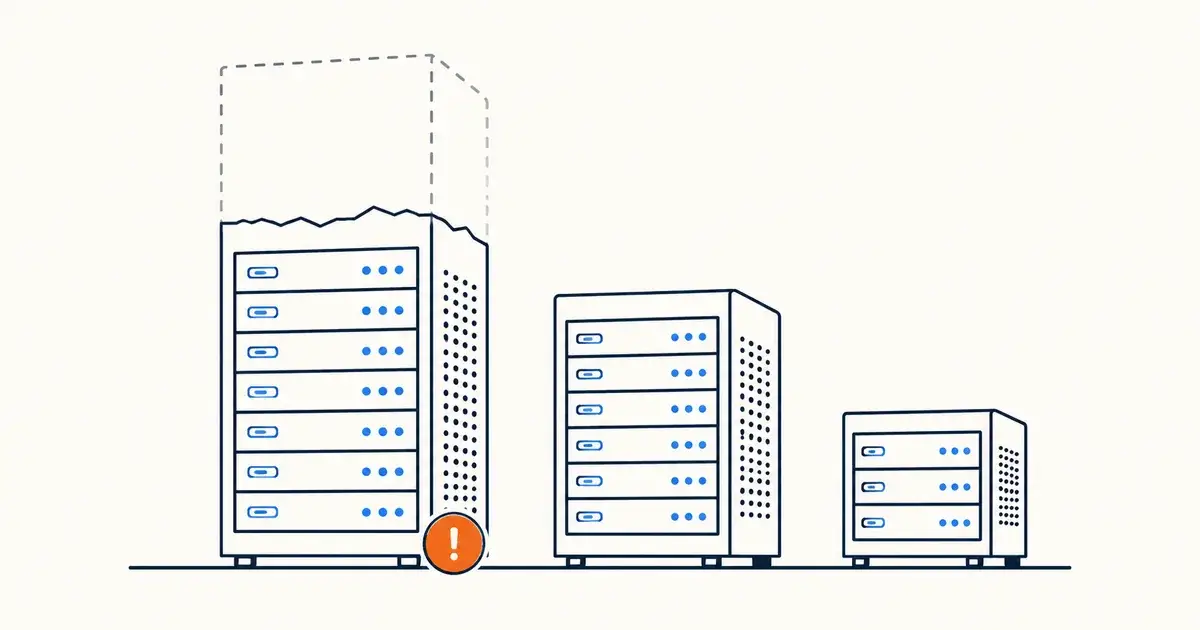
Free servers are real, and they are smaller than they were last year. Oracle halved its free Arm allowance in June 2026 without announcing it, and AWS ended the twelve-month free tier for new accounts. This page compares what each provider gives you today: specs, time limits, and the rules that reclaim your instance.
Free tiers shrink without warning.
Subscribe for infrastructure notes and guides from Mr.PlanB, including updates when the numbers on pages like this one move.
Quick comparison: free VPS and cloud server tiers
Free plans change, sometimes silently. Every figure here was checked against the provider’s own documentation on August 8, 2026. Verify before you rely on it.
| Provider | What you get | Free forever? | Card? | The catch |
|---|---|---|---|---|
| Oracle Cloud Always Free | 2 Arm OCPUs / 12 GB RAM, plus 2 × AMD micro VMs | Yes | Yes | Allowance halved in June 2026; idle instances can be reclaimed |
| Google Cloud | 1 × e2-micro, 30 GB disk | Yes | Yes | Three US regions only; 1 GB/month egress before charges |
| Microsoft Azure | B1S / B2pts v2 / B2ats v2, 750 hours per month | No, 12 months | Yes | Credit expires after 30 days; the VM allowance after 12 months |
| Amazon Web Services | $100 credit, plus up to $100 more | No, 6 months | Yes | The 12-month free tier is gone for accounts opened after July 15, 2025 |
| Render | 750 instance-hours per workspace per month | Yes | No | Spins down after 15 minutes idle; roughly a minute to wake |
1. Oracle Cloud Always Free
2 Arm OCPUs / 12 GB RAM, plus 2 × AMD micro VMs
Still the most generous free tier in existence, and still the one with the most asterisks. The Ampere A1 allowance is 1,500 OCPU-hours and 9,000 GB-hours per month, which works out to a single always-on instance with 2 Arm cores and 12 GB of RAM. You also get two tiny AMD VMs (1/8 of an OCPU and 1 GB each), 200 GB of block storage and 20 GB of object storage.
The number most articles still quote is 4 OCPUs and 24 GB. That was true until June 15, 2026, when Oracle halved it. There was no blog post and no email. Oracle edited the documentation, and people found out when their instances were resized or stopped. If you are reading a comparison that still says 24 GB, it has not been updated since spring.
Two more things bite in practice. Arm capacity in popular regions is frequently exhausted, so provisioning fails with an out-of-capacity error until you retry (often for days). And your home region is fixed at signup and cannot be changed, so choose it deliberately.
Best for: The closest thing to a real always-free server, if you can tolerate the operational friction.
Oracle Always Free resources2. Google Cloud
1 × e2-micro, 30 GB disk
One non-preemptible e2-micro instance per month, with 30 GB-months of standard persistent disk. It is genuinely always free rather than a trial, which puts it in a small club.
The constraints are geographic and bandwidth-shaped. The instance is only free in Oregon (us-west1), Iowa (us-central1) and South Carolina (us-east1). Spin it up in Europe and you pay. Outbound transfer is free only for the first 1 GB per month from North America, excluding China and Australia. GPUs and TPUs are never included.
The e2-micro is a shared-core machine, so use it to park a small always-on service and do your compiling somewhere else.
Best for: A permanently free, low-traffic endpoint you never want to think about again.
Google Cloud free tier3. Microsoft Azure
B1S / B2pts v2 / B2ats v2, 750 hours per month
Azure gives new accounts $200 in credit valid for 30 days, plus twelve months of selected free services. For servers that means burstable VMs (B1S, the Arm-based B2pts v2 and the AMD B2ats v2) for up to 750 hours a month, which is enough to keep one running continuously.
Two clocks run at once and both matter. The $200 credit expires 30 days after signup whether you spend it or not, and the 12-month free-services window starts the day you open the account. Neither renews.
It is a good way to run something real for a year at no cost. Treating it as a permanent home is how people get surprise invoices in month thirteen.
Best for: A year of genuinely useful capacity, with a calendar reminder set for month eleven.
Azure free account services4. Amazon Web Services
$100 credit, plus up to $100 more
This is the entry that has changed most, and the change is easy to miss. AWS restructured its free tier on July 15, 2025. New accounts no longer get the twelve months of t2.micro/t3.micro that everyone remembers from a decade of tutorials.
Instead you choose a Free Plan at signup and receive $100 in credits immediately, plus up to $100 more for completing onboarding tasks. The Free Plan ends after six months or when the credits run out, whichever comes first, and unused credits expire twelve months after signup.
Accounts created before that date keep the legacy twelve-month allowances. So two people can follow the same tutorial and get completely different bills, depending only on when they signed up. Check which regime your account is under before you rely on anything being free.
Best for: Learning AWS specifically. A poor choice if you just want a server that stays free.
AWS Free Tier5. Render
750 instance-hours per workspace per month
Render is not a VPS, since you do not get a machine you can SSH into, but it solves the same problem for a lot of people, so it earns a place here. Render gives each workspace 750 free instance-hours per calendar month, and no credit card is required to start.
The catch is idling. A free web service spins down after fifteen minutes without traffic and takes about a minute to come back on the next request. For a hobby API or a personal dashboard that is fine. For anything a human is waiting on, that first-request minute is brutal.
If you exhaust the 750 hours, free services are suspended until the next month rather than billed.
Best for: Deploying a small app from a Git push without touching a server at all.
Render free tier docsRecently shrunk or killed
Free tiers do not usually die loudly, so it is worth knowing which ones already have. These appear on plenty of current listicles and should not.
- Fly.io removed its permanent free allowance in 2024. New accounts get a short trial instead of a free tier.
- Heroku ended free dynos in November 2022, the cut that started this whole pattern.
- Oracle’s 4 OCPU / 24 GB Arm tier was halved on June 15, 2026, and is still quoted as current almost everywhere.
How to choose one
Decide whether you need permanence or capacity. Azure and AWS give you more machine for a fixed window; Oracle and Google give you less machine for an indefinite one. Pick the one that matches the project, whatever the biggest number is.
Assume the instance will vanish. Idle reclamation, capacity errors and silent allowance cuts are all normal on free tiers. Keep the build reproducible with a container image, a script, or anything else that rebuilds the box in minutes, and keep nothing on it that only exists there.
Set a billing alarm before you deploy anything. Every provider here except Render has your card. The expensive mistakes are egress overages and free windows ending unnoticed, and both are invisible until the invoice.
Pair it with monitoring you also do not pay for. A free instance with no alerting is a machine that fails silently. See our free uptime monitoring comparison, and note that Uptime Kuma self-hosts happily on the Oracle or Google instances above.
If it is really a homelab you want, build one. None of these will run a hypervisor. For that you want hardware and Proxmox, with a free VPS acting as the public front door via a tunnel or WireGuard endpoint.
Frequently asked questions
Is Oracle's free tier really free forever?
The Always Free resources have no time limit, unlike AWS or Azure trials. But 'always free' does not mean 'unchanging': Oracle halved the Ampere A1 allowance from 4 OCPUs and 24 GB to 2 OCPUs and 12 GB on June 15, 2026, without any announcement. Oracle can also reclaim instances that sit idle for extended periods. Treat it as free but not guaranteed.
Why do free VPS providers ask for a credit card?
Mostly to deter abuse. Free compute is attractive to crypto miners and spammers, and a card is the cheapest identity check available. Oracle, Google, Azure and AWS all require one. Render does not. A card on file also means an expired free window can turn into a paid one without you noticing, so set a billing alert on day one.
Can I run Proxmox on a free VPS tier?
No. Proxmox VE is a bare-metal hypervisor: it expects to own the hardware and to run VMs with hardware virtualisation. Free cloud instances are themselves virtual machines, and nested virtualisation is either unavailable or unusably slow on shared-core free tiers. If you want to run Proxmox, you want a physical machine or a dedicated server.
What happens when a provider cuts or kills its free tier?
Usually you get a deadline to resize or migrate, and sometimes you get nothing at all: users discovered Oracle's June 2026 cut on their own, with no announcement. Fly.io removed its permanent free tier outright in 2024. The practical defence is the same as with free storage: keep your configuration reproducible, keep a copy of your data elsewhere, and never let a free tier be the only place something lives.
Is a free VPS safe to use for production?
For anything with users depending on it, no. Free tiers carry no meaningful SLA, can be reclaimed for inactivity, and can change terms without warning. They are excellent for learning, side projects, monitoring agents, bastion hosts and tunnel endpoints. For production, the honest comparison is a $5/month instance, which removes every constraint on this page.
Related guides
Last verified August 8, 2026.