

Proxmox VE 9.1 Is Here: What's New and What to Watch Out For
Proxmox VE 9.1, the latest version of the Proxmox virtualization platform, is officially out, and it does more than a maintenance release usually does. The release is packed with meaningful improvements, a few understated but important changes, and some caution signs you'll want to pay attention to if you're running it in production. Built on Debian 13.2 "Trixie" and shipping with the Linux Kernel 6.17.2 by default, this release tightens the bolts on nearly every layer of the virtualization stack.
Proxmox VE 9.2 Released: Dynamic Load Balancing, Expanded SDN & More!
Here's what's actually worth knowing about the update, and how it might affect your setups, workflows, and sanity.
The small feature that could: LXC from OCI images
LXC containers can now be spun up directly from OCI images, which might not sound sexy on the surface, but it's a big deal. The Open Container Initiative format has become the de facto way to distribute containers across ecosystems, and now you can use those same OCI images to generate full system containers within Proxmox. Whether you're pulling application images from a registry or uploading your own, this adds flexibility and brings Proxmox closer to the container standards seen in tools like Podman and Docker.
There's even a tech preview for application containers built this way. If you've been juggling LXC templates and wishing for something a little more standardized, this is a welcome pivot.
Virtual TPMs get more real
Trusted Platform Modules (TPMs) have been a sticking point for anyone running modern Windows guests or sensitive workloads. Proxmox VE 9.1 now supports storing TPM state in the qcow2 format, which lets you snapshot virtual machines that use a TPM, even if you're storing them on NFS or CIFS shares.
For users trying to bring Secure Boot or Windows 11 environments into their virtual clusters, this is the kind of behind-the-scenes infrastructure fix that removes headaches without making headlines.
Nested virtualization just got smarter
Nested virtualization support is nothing new, but until now it was a bit of a sledgehammer approach. In 9.1, there's a new nested-virt flag that allows you to enable nested virtualization on vCPUs that mimic the host CPU's vendor and generation, without having to expose the entire host CPU.
That might sound like minutiae, but it gives you finer control. Want to run a hypervisor inside a guest, or enable Microsoft's Virtualization-based Security (VBS) in Windows without exposing every single CPU flag to the VM? Now you can.
SDN gets a real status update
Software-Defined Networking (SDN) in Proxmox has slowly matured, and the 9.1 update brings GUI visibility that admins have been screaming for. You can now see which guests are connected to which bridges and VNets, and EVPN zones even report learned IPs and MACs. That kind of visibility makes troubleshooting a lot less painful, so it's more than cosmetic.
Fabrics now show up in the resource tree too, with details like routes and interfaces. If you're running complex networking setups, this removes a big layer of guesswork.
GUI improvements that actually matter
Proxmox VE 9.1 also includes a decent batch of UI tweaks, most of which target quality of life rather than wow factor. You can now right-click tags to bulk manage groups of VMs. The mobile UI got a refresh with better Firefox detection, improved layout scaling, and login support via OpenID Connect. Icons are now high-DPI friendly, and memory usage warnings have smarter thresholds.
The dev team is clearly trying to make life easier without reinventing the wheel. For once, these updates solve real annoyances instead of just changing how things look.
Kernel 6.17: fast, powerful, and a little risky?
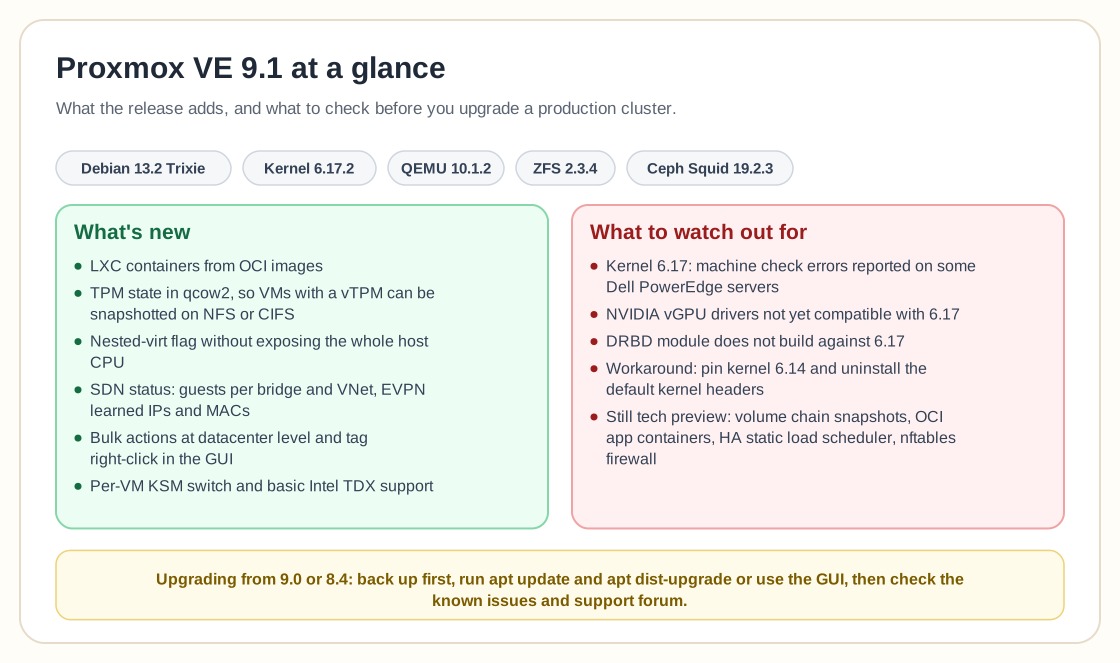
The new kernel brings better performance, bug fixes, and extended hardware support. It also brings problems.
There are already reports of issues when running kernel 6.17 on certain Dell PowerEdge servers, including machine check errors. If you're using NVIDIA's vGPU stack, the bad news is that the drivers aren't yet compatible with this kernel. The DRBD module also won't build properly against 6.17.
The workaround is to manually pin kernel 6.14 and uninstall the default kernel headers. It's not rocket science, but it isn't friction-free either. For mission-critical environments, this part of the upgrade deserves a pause and a plan.
QEMU, ZFS, Ceph, and more: under-the-hood wins
QEMU 10.1.2 brings better performance and stability, plus support for TPM in qcow2 format. ZFS 2.3.4 and Ceph Squid 19.2.3 bring improved support, especially for newer Windows guests and modern workloads.
Proxmox now includes basic support for Intel TDX, a step into confidential computing. Windows doesn't support it yet, but the groundwork is being laid.
PCI passthrough also saw tweaks, like better handling of devices already bound to a VFIO driver. And you can now disable KSM (Kernel Samepage Merging) per-VM, which is a nice option when optimizing for performance instead of density.
Datacenter-level bulk actions
If you've ever wanted to restart or migrate a whole group of VMs across nodes without going one-by-one, Proxmox 9.1 finally delivers. Datacenter-level bulk actions now make it easy to apply operations to many guests at once. Admins have requested this for a long time, and they started celebrating immediately.
What's still in tech preview
A few things are present but not yet polished. Snapshots as volume chains are useful but not fully baked. App containers via OCI have only partial support for now. The static load scheduler for HA is available but in preview, and the firewall upgrades using nftables are promising but not fully stable. Tread lightly with these until they graduate from preview status.
Known issues and upgrade advice
For anyone planning to upgrade from 9.0 or 8.4, make backups first, always. Use apt update && apt dist-upgrade or do it via the GUI. Pin your kernel if you're relying on hardware or tools that don't play nice with 6.17. And check the known issues and support forum for real-world feedback, because even the best changelogs miss stuff.
Which repository you're pulling these updates from matters too. See our breakdown of whether a Proxmox subscription is worth it if you're deciding between the enterprise and no-subscription repos.
Final thoughts
Proxmox VE 9.1 doesn't reinvent the platform; it evolves it, which may matter more. It brings a good mix of polish, performance, and practicality, especially for those running large clusters or juggling diverse workloads.
Sure, there are a few gotchas (hello kernel 6.17), but if you plan the upgrade right and pin what needs pinning, you'll likely walk away with a smoother, more powerful system. For long-time Proxmox users, this release feels like a nod to the community. It doesn't try to be flashy, and it makes your life easier.