

Proxmox PVE Subscriptions: Worth It or Just a Paywall for Stability?
No-Subscription Repository
€0/year
Enterprise Repository
€115+/socket/year
Need help deciding for your business?
We can audit your infrastructure and recommend the right subscription tier for your environment.
Contact UsIs a Proxmox VE subscription worth paying for? If you've spent any time tinkering with virtualization at home or deploying Proxmox VE (PVE) in production, chances are you've stumbled across the infamous nag screen. It pops up after logging in, gently reminding you that you're not using a subscription version of Proxmox. Depending on who you ask, it's either a harmless nudge or an unwelcome annoyance.
So what is the PVE subscription really about? Is it just a way to funnel users into paid support tiers, or does it offer something valuable, especially for stability, patch management, and enterprise-readiness?
We looked at the conversation happening across the community, and the answers are nuanced. Removing a pop-up turns out to be the least of it.
What you get when you pay
A Proxmox PVE subscription gets you:
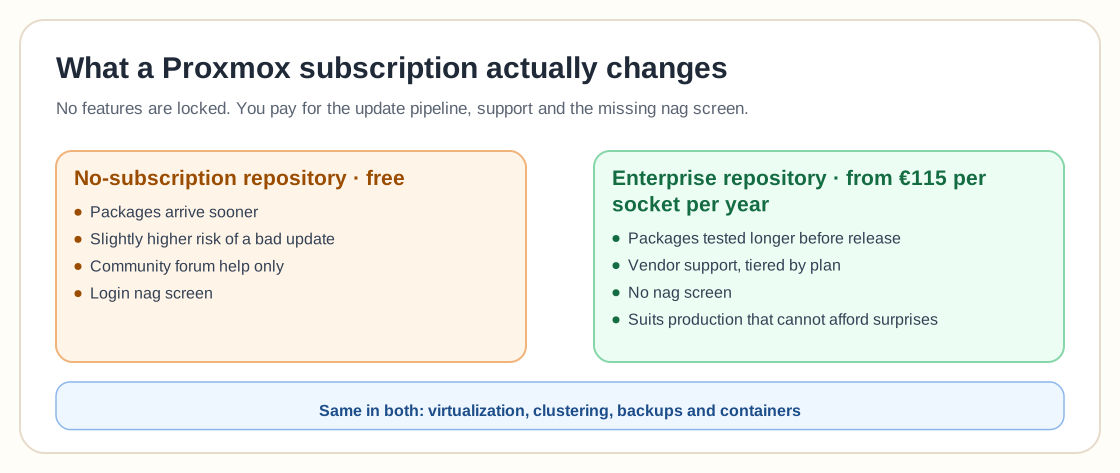
- Access to the enterprise package repository (aka the "stable" repo)
- Technical support (tiered depending on your plan)
- The removal of the login nag screen
- A warm sense of supporting the devs, or the business, depending on your perspective
For homelabbers and small shops who don't need formal support, the immediate reaction is: "Why pay when it all works just fine without it?"
They're not wrong. The core functionality of Proxmox is fully available without a subscription. Virtualization, clustering, backups and containers are all there, and no features are locked behind a paywall. That alone sets Proxmox apart from a lot of enterprise-focused tools that dangle essential functionality behind licenses.
The stability factor: enterprise vs. no-sub repos
This is where things get more interesting, and more divisive.
When you opt into the subscription, your money buys access to the enterprise repository, where packages are more thoroughly tested before release. For businesses running mission-critical infrastructure, that kind of slow-and-steady update pipeline matters a lot. You don't want your hypervisor suddenly acting weird because of a half-baked update.
The flip side is that free users are, in effect, beta testers. They live on the "no-subscription" repository, which gets packages faster, but with a slightly higher risk of bugs slipping through. One user quipped: "Everyone on the free repo, in addition to Proxmox themselves, are testing the packages for the enterprise repo."
It's a clever setup, and it's not uncommon in the open-source world. It does blur the line between paying for support and paying for safety, though.
The CPU socket controversy
This is where the rubber really hits the wallet.
Proxmox licenses are priced per CPU socket. At €115 per socket per year (for the basic community license), that might seem reasonable until you realize your dual-socket board just doubled your cost. Add a couple more nodes to your cluster, and suddenly you're staring at hundreds of euros per year… just to avoid a nag screen and get some repo access.
For homelabbers, this feels like overkill. One user nailed the sentiment: "Community is far too expensive for home users imo. I'd love to contribute… but €115 per CPU socket per year is not realistic."
That theme came up again and again. Tons of users expressed willingness to pay, just not that much. They want to support the project, but they're looking for something like a $25 "homelab license" that removes the prompt without pretending they need enterprise-grade support.
Is it developer support or business revenue?
Another point of contention is what exactly you're supporting when you subscribe.
Some view it as a way to throw a few bucks at a great open-source project. Others point out that Proxmox is a for-profit company rather than a passion project, and the subscription model is fundamentally a business strategy rather than a charity drive.
As one enterprise user put it: "If you want to support Proxmox as a company, then pay for support, but not because of some poor undeserved development team, as that is not the case here."
This matters because it shapes how users think about value. If you're paying for access to tested patches and support, the pricing might make sense for a business. If you're being asked to pay just to not see a nag screen, that feels a lot more like an upsell.
So… is it worth it?
If you're a business, the answer is probably yes. For a few hundred euros a year, you're buying stability, peace of mind, and vendor support. That's standard-issue IT budgeting.
For homelabbers, it's complicated. You're not getting any extra features. You can still use the free repository, and you can even remove the nag screen manually if you're comfortable with a little CLI tweaking. For most hobbyists, the paid subscription doesn't unlock anything essential, and that's the catch.
The general sentiment among users is pretty clear: Proxmox is fantastic software. It runs well, scales easily, and competes with tools that cost 10x more. The pricing model feels like a mismatch, though, for the enthusiast crowd who helped build its reputation.
What the community wants
There's a ton of goodwill in the Proxmox community. People want to give back. Many would happily pay a one-time fee or a smaller recurring amount to support development, and maybe get a t-shirt or mug in return.
"Proxmox should sell some merchandise," one user suggested. "Case stickers, t-shirts, mugs. That would make them a bit of money off the home users."
Another floated the idea of a "supporter's license" that costs €25 to 50, removes the nag screen, and maybe offers forum perks without touching the core product. The point is to offer realistic, flexible ways to support the platform, and charity has little to do with it.
The bottom line
Proxmox PVE subscriptions aren't a scam, and they're more than a nag-screen tax. They offer real value, particularly for businesses that need stability and support. For home users, though, the pricing and structure feel a little tone-deaf.
If Proxmox wants to keep its enthusiast base happy (and maybe turn more of them into paying customers), it might be time to rethink the subscription model with tiered pricing, homelab licenses, or merch. Give people more ways to support the platform without forcing them into a commercial pricing tier.
Right now the product is great and the community is passionate, and the only thing standing between them might just be a login prompt.
Frequently Asked Questions
Is a Proxmox subscription worth it?
For production and business use, yes. The enterprise repository gets more thoroughly tested updates, and you get access to official support. For homelabs and non-critical use, the free no-subscription repository is stable enough for most people; you're trading a slightly less battle-tested update stream for zero cost.
What does a Proxmox subscription actually include?
It includes access to the enterprise package repository (updates that have had more real-world testing before release) and, depending on tier, access to Proxmox's official support channels. Core features stay open to everyone: Proxmox VE's virtualization, clustering, and backup functionality is the same whether or not you subscribe.
Can you use Proxmox without a subscription?
Yes. Proxmox VE is fully functional without a subscription. You just get a login nag on the web UI and use the no-subscription repository instead of the enterprise one. Many homelab and small-business deployments run this way indefinitely without issues.