

We Tried to Replace Veeam and Learned Backup Is Always a Trade-Off
The breaking point: when "good enough" isn't smooth enough
Every MSP hits a moment where a tool that's technically solid starts to feel… heavy. That's where this story begins. A small provider, juggling Hyper-V, Proxmox, Microsoft 365, and the constant hum of ransomware anxiety, looked at their setup and thought: why does this feel harder than it should? The platform worked, sure, but licensing felt like a maze, costs kept creeping, and worst of all, it didn't feel designed for the way MSPs actually operate day to day.
Veeam Pulling a Broadcom? 2025 Price Hikes Explained!
What they wanted wasn't revolutionary: something that handled backups, disaster recovery, SaaS protection, and multi-tenant management without turning every task into a mini project. As the discussion unfolded, though, it became clear that replacing a tool like Veeam depends as much on what you're willing to give up as on features.
The temptation of simplicity: why Cove keeps coming up
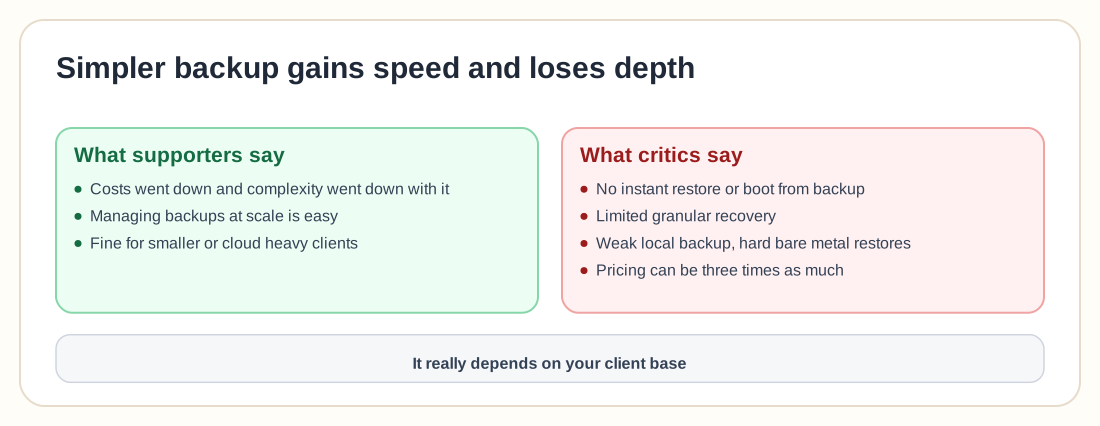
One name kept surfacing: Cove. The praise was immediate and almost disarming. One voice put it simply: "our costs went down, and complexity went down with it." That's the kind of sentence that makes any MSP lean in. Less overhead, fewer headaches and easier deployment sound like the dream.
Another perspective echoed that sentiment but added nuance: "management of backups at scale is so easy now." That goes beyond convenience into operational leverage, because when you're managing dozens or hundreds of clients, simplicity compounds.
Even the supporters didn't pretend it was perfect. "Does it have every single feature? Absolutely not," one admitted, almost casually. The trade-off is clear: you gain speed and clarity, but you might lose depth. For many smaller or cloud-heavy clients, that's a trade worth making. For others, it's a risk.
The reality check: what you lose when you simplify
Then came the pushback, and it was sharp. Some voices went past skepticism into bluntness. "Not nearly as good," one said, pointing to weak local backup options, complicated bare metal restores, and missing restore flexibility. That's far from a minor complaint, since it goes straight to disaster recovery.
Another comment drilled deeper into the technical gaps: no instant restore, no boot-from-backup capability, limited granular recovery options. "What about restores to dissimilar hardware?" they asked, almost rhetorically. It's the kind of question that doesn't matter until it really, really does.
Pricing wasn't a clear win either. While some saw savings, others saw the opposite: "three times as much" in certain setups. That contradiction says a lot, because cost depends on context. What works for one MSP's client base can break another's model overnight.
The middle ground: nobody is actually going all-in
Strikingly few people are truly committing to one solution. Instead, a consensus is forming around hybrid strategies. One approach stood out: "small clients use Altaro… bigger environments use Veeam." It's not elegant, but it's practical.
Another variation leaned even more modular: keep Veeam for infrastructure, use something else for Microsoft 365, maybe switch again later. That's about fit more than loyalty. Tools become situational, almost disposable depending on the workload.
Even longtime Veeam advocates aren't walking away entirely. One admitted they'd "definitely be using it less," without abandoning it. That's a subtle but important shift: Veeam is being repositioned more than replaced.
The hidden question: what are you really selling?
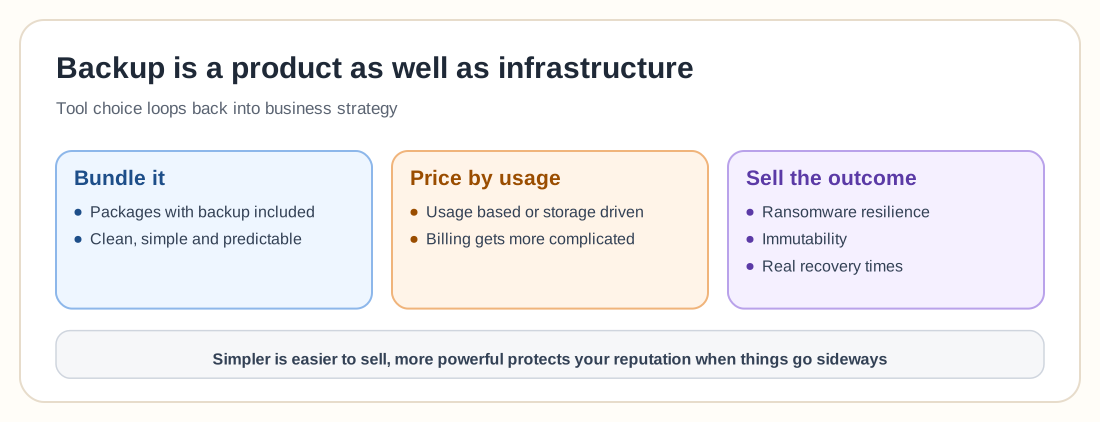
Underneath all the technical debates sits another tension: how do you actually sell this to clients? For an MSP, backup is a product as well as infrastructure.
Some bundle it. "I don't rent out licenses… I offer packages where backup is included." That's clean, simple and predictable. Others lean toward usage-based or storage-driven pricing, even if it complicates billing.
Then there's the emotional sell. Ransomware resilience, immutability and real recovery times work on clients as fear triggers more than as features. Clients don't care about "instant restore" until you explain what happens without it.
That's where the tool choice loops back into business strategy. A simpler platform might be easier to manage and sell, but a more powerful one might protect your reputation when things go sideways.
There is no perfect stack
By the end of the conversation, it's obvious that everyone is compromising, just in different places.
Some prioritize simplicity and accept fewer features. Others demand full control and accept higher complexity. A third group splits the difference, stitching together multiple tools and hoping the seams don't show during a crisis.
Maybe that's the takeaway. Backup is still a balancing act between cost and capability, between ease and control, and between what works today and what might save you tomorrow. Or as one voice indirectly summed it up: "It really depends on your client base." That's not a satisfying answer, but it's the honest one.