

VMware VCF 9.1 Requirements Leave Smaller Labs Feeling Shut Out
The upgrade that suddenly feels too heavy
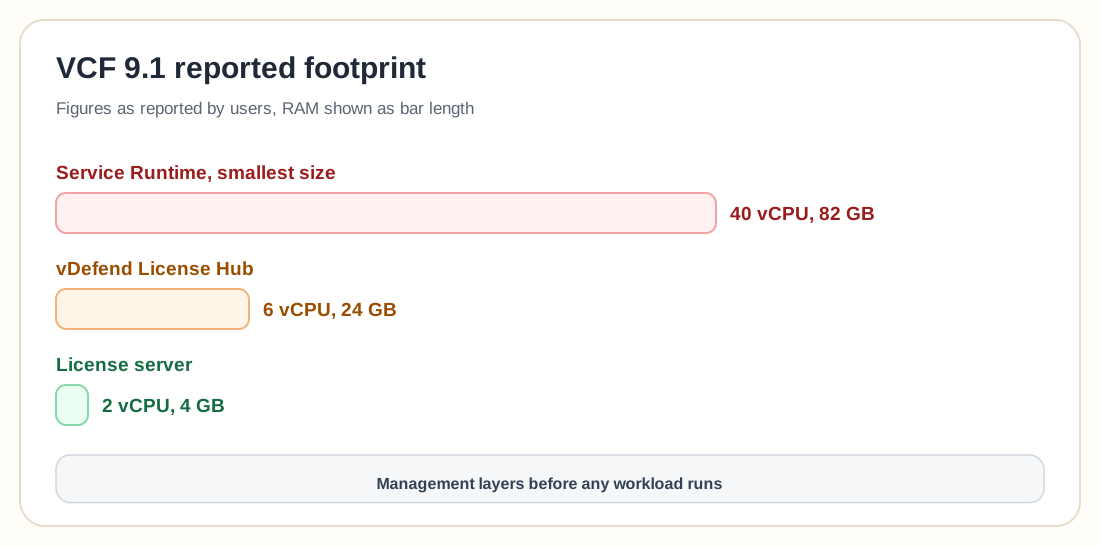
It's frustrating when a platform you've invested time, hardware, and patience into suddenly decides your environment is too small, and that frustration runs all through the reaction to VCF 9.1. Everyone expects a new version to need somewhat more resources. The anger is about scale. A smallest-size VCF Service Runtime reportedly asking for 40 vCPU and 82GB of RAM doesn't feel like a bump. It feels like someone dropped a second platform on top of the first one and called it progress.
VCF 9.1 Design Blueprints: Is VMware's Complexity Pushing You to Proxmox?
For people running compact environments, that number lands badly. They don't hate new features; the problem is that the day-to-day user experience may not look dramatically different after swallowing all that overhead. One person put it bluntly: "On the surface, it's not doing much new." That's the part that stings. If the upgrade brought some obvious, can't-live-without leap, maybe the cost would feel easier to defend. Instead, it looks like a massive management-layer tax, especially for labs and smaller production setups that already run close to the edge.
When the management stack starts eating the lab
Overhead is the villain here. VCF has always been serious infrastructure rather than a featherweight toy, but 9.1 seems to push that into absurd territory for home labs. The VCF Service Runtime may have benefits. A more service-oriented architecture could make updates cleaner, separate components better, and give teams a path to scale pieces independently. That's the optimistic read. Optimism gets harder, though, when the smallest deployment starts demanding resources that many people were saving for actual workloads instead of the machinery that manages those workloads.
The licensing pieces add another layer of irritation. A new license server at 2 vCPU and 4GB might be shrugged off as annoying but survivable. Then vDefend enters the room, apparently unlicensed after upgrade and requiring its own License Hub, with 6 vCPU and 24GB being thrown around. That's where disbelief kicks in. One commenter basically asked how a license server could need that much memory at all, joking that a whole Linux desktop can run comfortably with far less. It's not the cleanest technical comparison, but emotionally, it lands.
The home lab crowd is getting squeezed hard
The home lab angle matters more than vendors sometimes admit. Labs are where people learn, test, break things, rebuild things, and eventually become the people recommending platforms at work. When a product becomes too heavy to run without expensive, loud rack servers, it cuts off a whole layer of future expertise without anyone announcing it. That's why the complaint about "pizza box servers" hits so hard. Nobody wants a screaming R640 under a desk just to understand a platform's management plane. At some point, the learning environment turns into an infrastructure procurement project.
There's also the practical hardware squeeze. RAM isn't free, and even clever tricks like NVMe tiering only go so far when the platform wants huge chunks before the useful workloads even start. The original setup was more than a disposable demo box, too: it was a homelab running real home services. That makes ripping everything out more than a weekend experiment. The likely fallback plan sounds almost like a retreat: vSphere, vSAN, NSX, Ops, Supervisor, but no SDDC Manager and no giant Service Runtime. It's less integrated, sure, and maybe more livable.
Some people see the architecture problem underneath
Not every reaction was pure rage. A few people tried to explain what might be happening behind the curtain. One take was that Broadcom had to duplicate pieces to pull them into a newer service platform, and that different teams may have sized their own microservices without enough pushback. That's a familiar enterprise software smell: every group protects its own service, pads its own requirements, and suddenly the combined product needs a small moon base to run. Nobody owns the total pain until customers try to install it.
There's a more generous version of that argument. Moving services into containers and separating components could eventually make the platform cleaner and more flexible. Maybe the first release is oversized because the architecture is still settling, individual services get tuned later, and the monster shrinks. One commenter captured the political trap perfectly, though: it's hard to launch with huge requirements and later say, "Just kidding, we downsized." Customers plan around the first number they see, and trust doesn't scale down as easily as a container.
The enterprise defense only goes so far
The strongest defense is simple: VCF is a cloud foundation stack that was never really meant for tiny environments or meant to be a minimalist hypervisor. If you're running serious private cloud infrastructure, management overhead is part of the bill. Bigger enterprises may absorb 40 vCPU and 82GB without blinking, especially if they value lifecycle management, automation, integrated networking, security, and a supported path through upgrades. From that angle, home lab complaints may look like people trying to make a battleship fit in a garage.
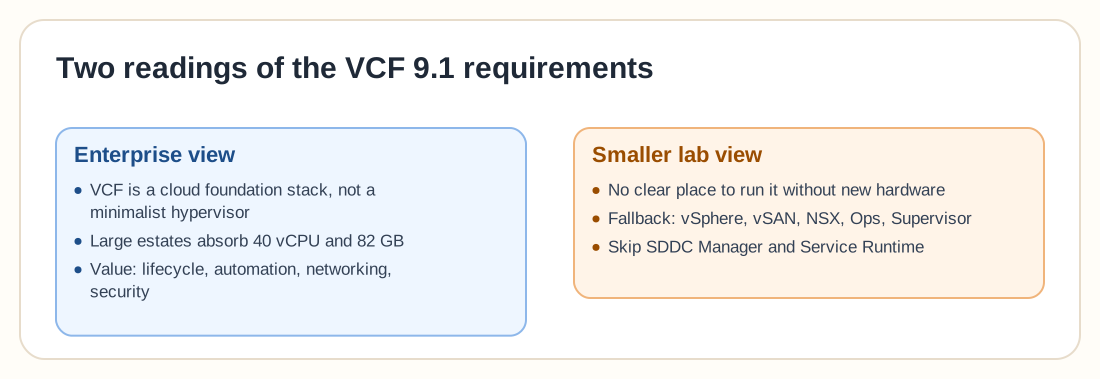
Even that defense has a ceiling. One person said they weren't sure where they'd run it even in production without buying new hardware, and that's the warning sign. When the requirements shock working admins as well as hobbyists, the product risks feeling detached from real-world estates. The ask might be acceptable for large, fresh deployments with budget and capacity. It's much harder for smaller shops, edge sites, sandboxes, and environments where the management domain isn't a bottomless bucket. "Enterprise-grade" shouldn't become a polite way of saying "resource-indifferent."
A platform can win the architecture and lose the people
This is bigger than one angry thread about RAM, because it's a trust problem. VMware's world has already been tense for customers dealing with licensing changes, packaging shifts, and Broadcom-era uncertainty. So when VCF 9.1 arrives with requirements that feel extreme, people don't read it as a neutral technical change. They read it as another sign that the platform is moving away from them, another moved goalpost, and another reminder that the center of gravity is shifting toward larger accounts and heavier stacks.
The saddest part is that nobody seems furious because they wanted VCF to fail. The anger comes from people who cared enough to run it, learn it, and bend their own hardware around it. They aren't asking for magic, just sizing that feels sane, features that visibly justify the cost, and a path that doesn't punish smaller environments for staying current. VCF 9.1 may be architecturally ambitious, but ambition has a price, and right now a lot of users are staring at that price and wondering whether the smartest upgrade is walking away.