

The Traefik Provider Proxmox Homelab Users Have Been Waiting For
For a long time, running services on Proxmox VE behind Traefik has come with a mental tax. Every new VM or container meant another round of Traefik config files, another YAML tweak, and another "don't forget to update routing" note stuck in your head. It worked, sure, but it never felt modern.
Docker users didn't have that problem. They got spoiled by automatic service discovery, labels that just worked, and routing that appeared as soon as a container spun up. Meanwhile, Proxmox users were still babysitting config files like it was part of the job description.
That gap is exactly where the Traefik Proxmox Provider lands. Judging by how people are reacting, it's the missing piece a lot of homelabs didn't even realize they were waiting for.
The itch that turned into a tool
The origin story is refreshingly familiar. The developer behind the project, Corey, wasn't trying to start a company or chase hype. He was running Proxmox in his own homelab, liked Traefik, and got tired of doing things the hard way.
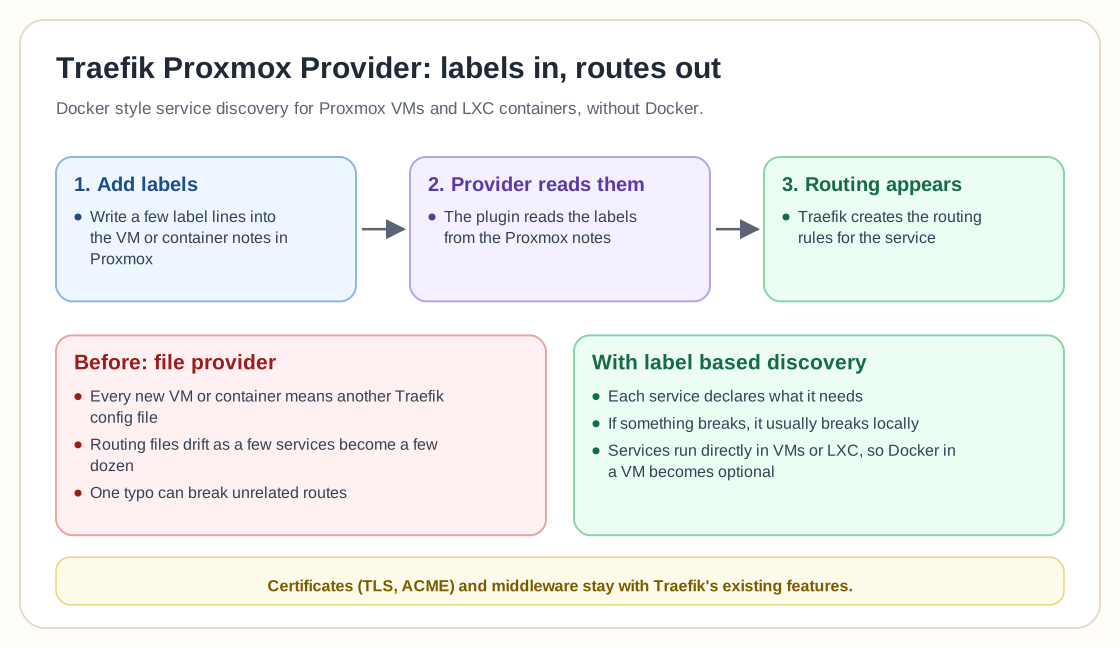
The idea was simple: what if Traefik could discover Proxmox VMs and containers the same way it discovers Docker services? That would mean no more manually maintaining routing files and no more config drift, just labels attached to workloads, with Traefik handling the rest.
So he built a provider plugin that reads labels directly from Proxmox VM and container notes. Drop in a few lines, spin up a service, and routing appears. If that sounds familiar, that's the point: it's Docker-style behavior without Docker being involved.
People immediately got it. Several users mentioned they'd searched for something like this before and come up empty. Others said they'd built their own half-working systems just to avoid touching Traefik YAML again. The plugin didn't invent a new idea; it finally applied a good one to the right place.
Why this matters more than it sounds
On paper, this is "just" a provider plugin. In practice, it changes how people think about their Proxmox setups.
A lot of homelabs ended up with Docker-in-a-VM as a workaround. It wasn't elegant, but Docker's discovery model made life easier, with Traefik labels, automatic routing, and fewer moving parts. The VM itself became a container host, and Proxmox faded into the background.
With label-based discovery at the Proxmox level, that compromise starts to look optional. You can run services directly in VMs or LXC containers and still get the convenience Docker users take for granted. One commenter even said this might be enough to rethink their entire setup, and that's a big statement. Homelabbers don't rebuild for fun; they rebuild when something finally makes the pain worth it.
The good, the rough edges, and the honest feedback
The response hasn't been blind praise, and that's a good thing.
One early adopter talked about setup being a little rough at first. A stray newline in a label caused the whole plugin to fail silently, which turned debugging into a game of trial and error. The fix ended up being "remove everything and add it back one label at a time," which works but isn't exactly friendly.
That kind of feedback is gold. People weren't dunking on the project. They were already using it in real environments and wanted better logging, better error isolation, and clearer failure modes, the same polish they're used to from Traefik itself.
It also shows the plugin crossed an important line, from "interesting idea" to "thing people rely on." Once users trust a tool with routing, expectations rise fast.
Label-based routing feels like the future, again
What stands out in the comments is how tired people are of manual config. They aren't angry about it, just done.
Maintaining file providers works until it doesn't. A few services turn into a few dozen, and suddenly every change feels risky. One typo can break unrelated routes, and certs stop renewing because a router didn't load. The system becomes fragile in ways that don't show up until something's already down.
Label-based routing flips that around. Each service declares what it needs, and if something breaks, it usually breaks locally. That mental model is why Docker discovery took off, and why people keep asking for it everywhere else. Seeing that model arrive in Proxmox feels less like a novelty and more like a correction.
Traefik users aren't the only ones paying attention
Interestingly, even people not running Traefik yet were paying attention. A couple mentioned they're currently using Caddy or other setups but said they'd give this a spin once they moved to Proxmox. Others said they didn't know the plugin existed and were glad it finally did. That's how tools win without much noise: they show up at the exact moment someone is reconsidering their stack.
There were also questions about TLS, ACME, and how deep the integration goes. Right now, the provider focuses on routing rules and leans on Traefik's existing features for certs and middleware. That separation makes sense and keeps the scope from exploding, but it also hints at where future enhancements could land.
Open source, life changes, and momentum
Another part of this story resonated with people, and it's the human one. The project went dormant for a while because life happened. Corey lost his long-time job and made the jump into development full-time, and that transition took time, energy, and focus. The plugin didn't die; it just waited.
When he resurfaced and shared the update, people responded with encouragement instead of skepticism. They asked how to help and talked about starring the repo, contributing docs, fixing bugs, and spreading the word. That's the upside of building something genuinely useful: even when progress slows, goodwill sticks around.
This is how infrastructure tools grow up
The Traefik Proxmox Provider isn't flashy, and it won't trend on social media. But it's exactly the kind of project that nudges an ecosystem forward.
It removes friction and respects how people already think. Instead of demanding a new workflow, it mirrors one users already love. And it came from someone who needed it themselves, not from a roadmap meeting.
There's still work to do, mainly better logging, safer parsing, and more guardrails. But the foundation is there, and more importantly, people are actually using it.
For Proxmox users who've been juggling YAML files, Docker workarounds, or homegrown routing dashboards, this feels like a small but meaningful shift, the kind that makes you pause mid-rebuild and think, "Wait, do I still need to do it this way?" Sometimes the best infrastructure tools don't change everything. They just make the obvious thing finally possible.